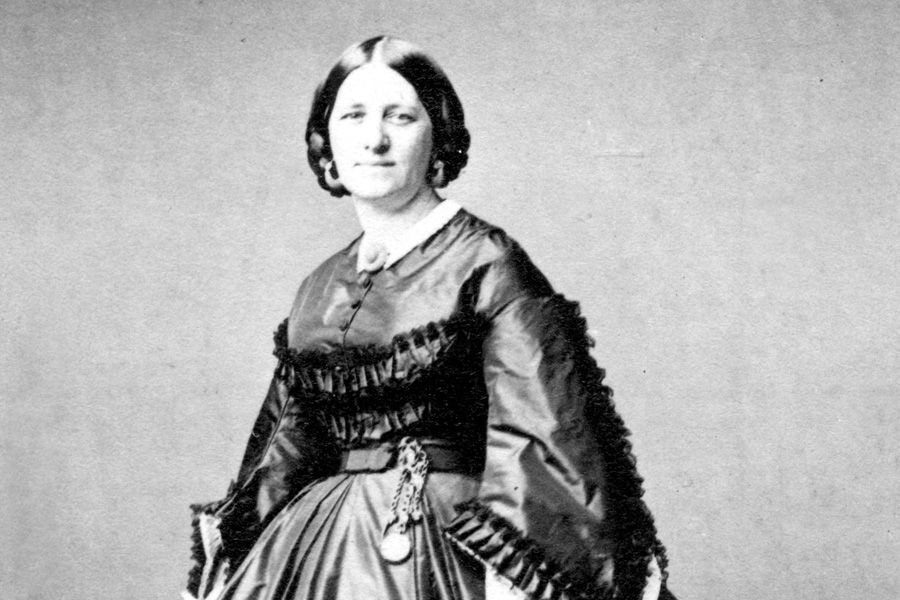
Who Was Phebe Jane Vanderbilt?
I first stumbled upon Phebe Jane Vanderbilt while exploring the early roots of one of the most powerful families in American history. Born on November 7 1814 in Staten Island New York she arrived as the first child of Cornelius Vanderbilt and Sophia Johnson. From the very start her life unfolded against the backdrop of explosive ambition. Her father the Commodore transformed a single ferry into a vast network of steamships and railroads amassing wealth that reshaped the nation. Yet Phebe Jane herself never sought the spotlight. She lived from 1814 to 1878 a span of 63 years that bridged the young republic and the dawn of the Gilded Age. Baptized on February 7 1815 at the Dutch Reformed Church of Port Richmond she grew up on Staten Island amid the salty air of her father’s early ventures. By the 1830s she had married and settled into New York life. Her death came on June 29 1878 in Manhattan. She rests in Woodlawn Cemetery in the Bronx within the Crown Grove South Section 34. In a family defined by bold moves and bigger headlines Phebe Jane Vanderbilt represented steady quiet strength like the keel of a ship that keeps the whole vessel steady through rough waters.
Her Deep Family Roots and Ancestral Ties
Phebe Jane Vanderbilt has a long genealogy of mariners and farmers. I liked how her story connects to her world-shapers. Her parents were essential. The self-made tycoon Cornelius Vanderbilt, born in 1794, amassed a $100 million empire by 1877. His first cousin Sophia Johnson Vanderbilt, born in 1795, was his loving partner and raised 13 children. Phebe Jane, the eldest, saw her father’s ferry business develop from little to national.
Her grandparents established paternity. Phebe Hand Vanderbilt, born in 1767 and surviving until 1854, gave her son Cornelius $100 to buy his first boat, starting the dynasty. Cornelius van Derbilt the older, a Staten Island farmer and boatman, laid the groundwork for his son’s success. Great grandparents went further. The Hand family was created when rich New Jersey sea captain Sam Hand married Phebe Lum. Jacob Vanderbilt was the father. The complicated web of great grandparents included Mary Sprague. These names and dates show Phebe Jane Vanderbilt as the link in a chain of determined spirits across decades and oceans. Her resilience was woven from each ancestor.
Marriage Life and the Next Generation
Around 1833 or 1834 Phebe Jane Vanderbilt wed James Madison Cross a man from Providence Rhode Island born in 1809. Their union lasted until her death and he survived her by 11 years passing in 1889. Together they raised seven children in the New York area first in Southfield Richmond County and later in Manhattan. I picture their household as a lively hub where Vanderbilt ambition met Cross practicality. The children arrived in quick succession and their stories add vivid layers to her legacy.
Here is a clear table of her children with key dates and notes:
| Child Name | Birth Year to Death Year | Key Details |
|---|---|---|
| Cornelius Vanderbilt Cross | 1834 to 1902 | Eldest son married Emma Mathilda Elderd in 1868 no children recorded |
| William Harrison Cross | 1836 to 1843 | Second son died in childhood |
| Edward Babcock Cross | 1838 to 1839 | Third son died in infancy |
| Sophia Vanderbilt Cross | 1839 to 1903 | Eldest daughter married Jerome Bonaparte Morse in 1864 had three children Grace Howard and Ethelinda born 1872 |
| Norman Franklin Cross | 1842 to 1907 | Son lived to adulthood |
| James Madison Cross Jr | 1845 to 1845 | Son died in infancy |
| Ethelinda Cross | 1847 to 1924 | Youngest daughter married Burton Wilson Horton in 1872 |
Siblings and Connections Within the Vanderbilt Empire
As the oldest of 13 children, Phebe Jane Vanderbilt was distinctive. Eliza Matilda Vanderbilt, born in 1819, married Osgood, and William Henry, born in 1821, inherited much of the Commodore’s estate. Brothers and sisters from Emily to George created a vast Gilded Age network. Phebe Jane saw her brother William Henry inherit 90–100 million dollars in 1877 while daughters like her earned less. Her first familial connection maintained her in privileged and elite circles. As the quiet elder sister, she set the tone for family gatherings and provided constancy during fast change.
A Life in Dates: Key Milestones and Timeline
Numbers and dates bring Phebe Jane Vanderbilt’s journey into sharp focus. Born November 7 1814 she married around 1833 or 1834 at roughly age 19. Her first child arrived in 1834 followed by six more through 1847. Census records place the family in Southfield in 1850 and in Manhattan by 1860 and 1870. Personal milestones include her mother’s death in 1868 her father’s in 1877 and her own on June 29 1878. Her husband outlived her until 1889. Daughter Sophia married in 1864 and Ethelinda in 1872 creating new alliances. These 13 children 3 early losses and 4 surviving adults to adulthood mark a full domestic chapter. The timeline reveals a woman who navigated 64 years of American growth from the War of 1812 era through Reconstruction without ever stepping into public business herself.
Her Financial World and Daily Realities
Phebe Jane Vanderbilt built no independent career. In an era when women rarely entered commerce she focused on home and family. As an heiress she enjoyed the comforts of her father’s success. The Commodore’s will favored sons yet she lived in upper class New York homes supported by the family fortune. No records show her managing investments or launching enterprises. Instead her achievements lie in raising a large family and maintaining ties across generations. Her life offers a window into the private side of wealth where stability and legacy mattered more than public deals. Like a hidden spring feeding a mighty river her contributions sustained the Vanderbilt name in subtle yet essential ways.
FAQ
How did Phebe Jane Vanderbilt fit into the larger Vanderbilt family story?
Phebe Jane Vanderbilt served as the eldest child and a foundational link. Born in 1814 she connected the Commodore’s early struggles to the empire’s peak. Her marriage and seven children extended the bloodline while her siblings like William Henry Vanderbilt carried the business torch. I view her as the steady bridge between humble origins and Gilded Age grandeur.
What role did her grandparents play in her early life?
Her paternal grandparents Phebe Hand Vanderbilt and Cornelius van Derbilt provided the spark. Phebe Hand’s 100 dollar loan in the late 1700s or early 1800s enabled the Commodore’s first boat purchase. That single act set the course for everything Phebe Jane experienced. The great grandparents Jacob Vanderbilt Sam Hand Phebe Lum and Mary Sprague added depth to this seafaring heritage.
Who were the most notable children of Phebe Jane Vanderbilt?
Sophia Vanderbilt Cross born 1839 and Ethelinda Cross born 1847 stand out. Sophia married in 1864 and raised three children including Ethelinda born 1872. Ethelinda the youngest daughter wed in 1872. Sons like Cornelius Vanderbilt Cross born 1834 and Norman Franklin Cross born 1842 reached adulthood and continued the line. These descendants kept the family vibrant long after 1878.
Did Phebe Jane Vanderbilt leave any public mark outside her family?
No independent career or business achievements appear in records. She focused entirely on domestic life from 1834 onward when her first child arrived. Her financial security came through inheritance and marriage rather than personal ventures. This private path makes her story refreshing in a family known for bold public figures.
Why explore Phebe Jane Vanderbilt today?
Her timeline from 1814 to 1878 and her role as mother to seven children reveal the human side of immense wealth. Dates like her baptism in 1815 her marriage around 1833 and her burial in 1878 offer concrete anchors. In a dynasty of tycoons she reminds us that every empire rests on personal foundations built one generation at a time.